Slutting Myself out for Linkedin Likes: a Professional Identity Crisis
2/17/2026
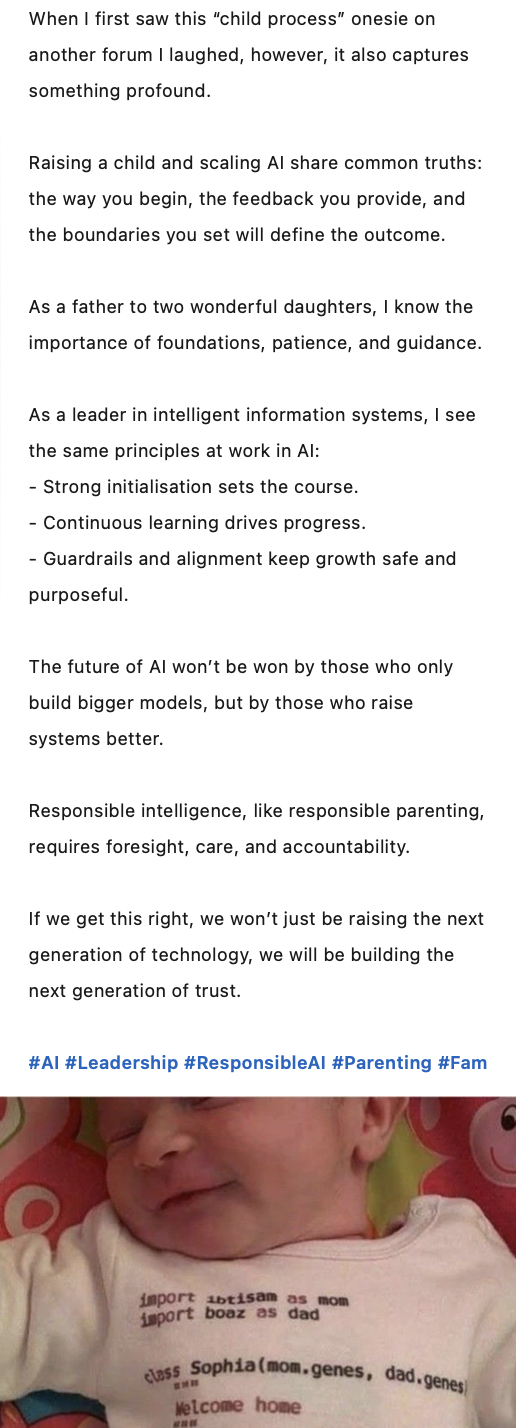
If you’re reading this, chances are you are a university student with a LinkedIn account. With 8 million posts a day on the platform, you certainly have stumbled upon someone’s lengthy text about how grateful they are to have been part of an inspiring, life-changing project, on an announcement of a new position at The Centre for Innovation, Sustainability and innovative Research for innovating the Future, or even gems such as “three ways in which generative AI made me realize I love my children”. Owned by Microsoft, LinkedIn is the largest professional online network in the world. More than just a social media platform, however, it has become a gauge for success. With an algorithm primarily based on engagement, every repost, like and comment (Amazing work! Looking forward to working with you again!) gets you a step closer to being noticed by a recruiter, who might grant you the great honour of going through, one, two, maybe – how exciting – even a third round of interviews! Which is why you’ve probably asked yourself the question before: do I have to post a photo of my best business-smile while standing in front of the UN flags to attract an employer’s attention? And if you’re like me, in a fit of desperation, you end up crossing that incredibly thin line, embracing the embarrassment of it all, and sell yourself out for all to consume you. With that first post – “dear network” – you’ve done it. You’ve slutted yourself out for LinkedIn likes.
Building a Personal Brand and the Marketisation of Self
Why do we even use LinkedIn? Firstly, it seems we are increasingly encouraged to do it. Universities actively introduce students to LinkedIn through coursework, seminars, and student organizations. We are more likely to intensely use LinkedIn when searching for internships or jobs, while using it more lightly, simply browsing opportunities during less pressured periods. Furthermore, unlike other social media, LinkedIn is perceived as purposeful and future-oriented. While on it, we don’t feel like we are endlessly doomscrolling, but rather like we are doing something productive. However, most students don’t post frequently, partly because they feel they lack notable achievements to share. Which is where we get to the more complex dynamics which differentiate LinkedIn from any other social media platform.
In fact, LinkedIn provides the perfect platform to reconcile two Gen-Z fatalities: the obsession with online validation and the desperate need for employment in an increasingly precarious job market. Allowing users to meet other people with similar interests and ambitions and connect with old colleagues and classmates, LinkedIn offers the opportunity to extract market value out of these networks. We thus engage in a process of social selling, where good and strong online relationships lead to more sales. Only, you must consider the product you’re selling. It is your job to run a pretty good marketing campaign to sell… yourself. While showing off one’s very best skills, talents and connections is a rampant phenomenon on all social media, studies have shown that users on LinkedIn particularly engage in ego-boosting. Rather than presenting just your identity to the world, you show off your utility to it: exhibiting all the best ways in which people can use you, uses for which you will subject yourself with grace. And to do it, you must build your very own personal brand.
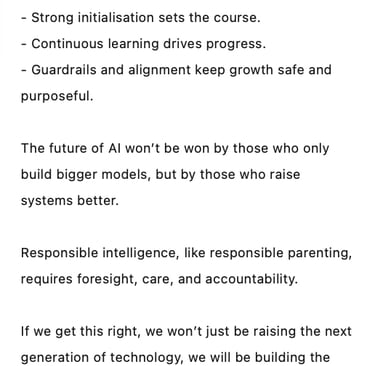
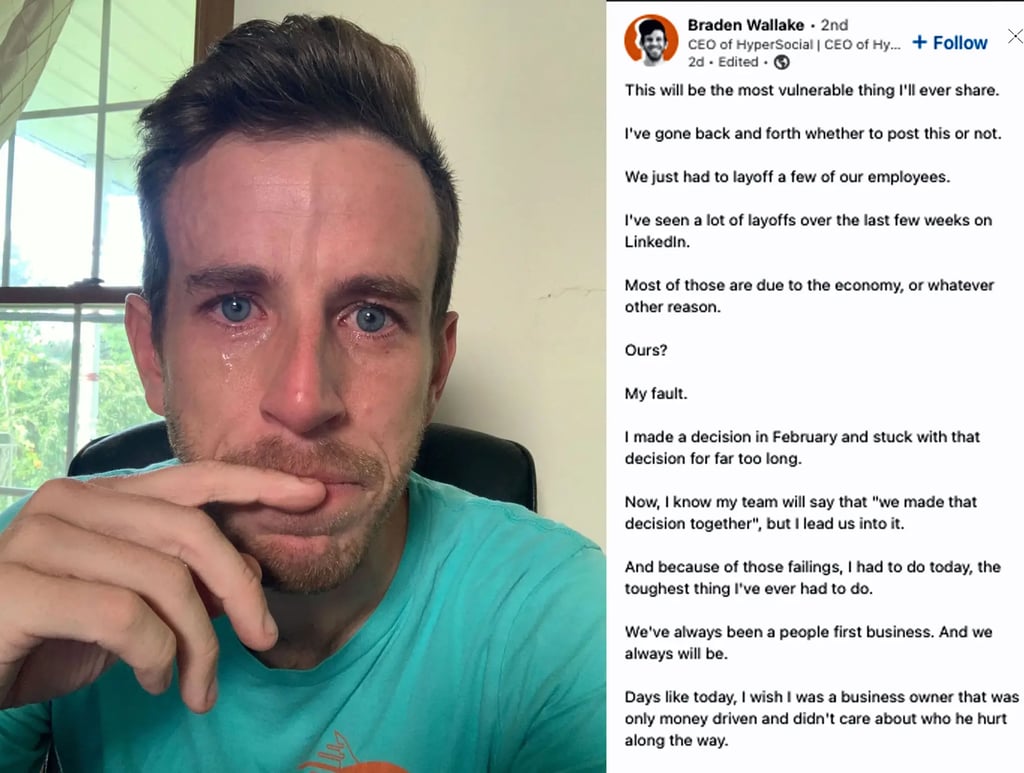
Social media users usually seek authenticity. Today, influencers are often judged for being too fake, while a carefully crafted authenticity is deemed as genuine and accepted. The line between perceived real or fake authenticity is thin. On LinkedIn, the most successful influencers have learned to give the people what they think they want: their authentic self wrapped in some thought-provoking, inspiring and motivational bullshit story. The platform incites us to marketize our polished best, with users being praised for their honesty and vulnerability, a characteristic which, traditionally, penalizes us in a professional setting. Suddenly, this vulnerability, which we have learned is to be kept separate from our work, becomes part of our strategy: authenticity sells. If you’ve ever prepped for a job interview, you’ve thought long and hard about the response to the age-old question: what are your strengths and weaknesses? Users have turned this question into endless content-farming on LinkedIn. You were fired? Here are three lessons you took away from this experience! Your child was sick, leading you to miss an important work meeting? Family is important – by the way, here is a link to our work-life balance success webinar! Mental health hasn’t been great? Take time off to remember what you love most about your work – and come back even stronger! Data confirms this shift to vulnerability marketing: on LinkedIn, hashtags such as #mentalhealth, #layoffs or #burnout have been gaining more and more traction. Who knew: nicely packaging your traumas on Linkedin might get you further than you thought.
You might say I’m being a bit too sceptical of this vulnerability phenomenon. No, rather than calling it oversharing, or trauma porn, we might view this shift to vulnerability as a positive thing. After all, sharing your feelings has always been shamed in the traditionally male-dominated workplace. Wouldn’t we be encouraging a healthy, mental-health positive turn by allowing ourselves to be vulnerable in professional settings? Not exactly. LinkedIn self-promotion works within a neoliberal paradigm where every individual perceives themselves as a business to be branded. This paradigm encourages users to align their authentic self with their professional trajectory, giving way to so-called strategic authenticity. LinkedIn demands us to perform the emotional labour of feeding the algorithm with more and more authentic feelings – but only the correct ones. Emotions that don’t fit the job description are to be hidden, and we are asked to reconcile this vulnerability with a professional environment constantly asking us to work better and faster. As a neoliberal entrepreneur of your own brand, it is your responsibility, and yours only, to triumph over your failures, to overcome negative emotions and experiences. What is more, struggles with emotional labour may be particularly accentuated depending on your gender, race, class, or disability. But that doesn’t matter: on LinkedIn, you shall never denounce the system. The only way to efficiently market your pain is to make sure it fits into the neoliberal culture. So remember, the world won’t change, only you can. It is the final commodification of pain under capitalism: your weakness must be market-friendly, emphasising positivity.
The Plight of Femvertising
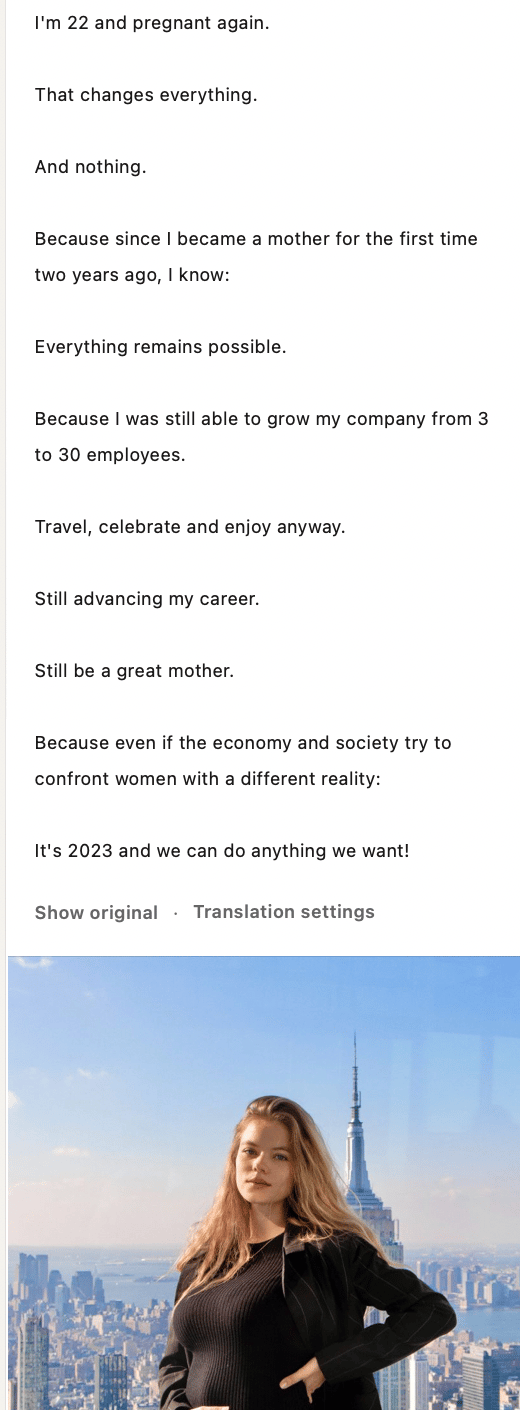
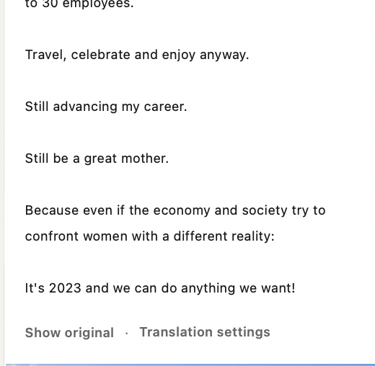
Ah, feminism. Equality, freedom, but most importantly… a business opportunity. Neoliberal feminism convinced us that women can be anything: a mom AND an entrepreneur! As long as you can perform both roles perfectly and without too many distractions. Femvertising is a form of targeted brand advertising aimed at attracting female candidates. By framing themselves as a company that stands for you and your rights, breaking down gender-specific workplace challenges, these companies specifically appeal to millennial and Gen Z women. Women have often been receptive to these types of brand messaging, adopting a more positive attitude toward brands they see as progressive. But it’s 2026, and again, authenticity is king. Women are starting to distrust this kind of messaging, seeing this advertising as what it is: insincere. Female users see through the #girlboss feminism front, recognising the hijacking of a movement for a company to grow economically. The failure of femvertising is also due to the disparity of usage based on gender. In general, men tend to be more active on the platform and perceive it as more effective. Meanwhile, women are less active and more likely to report fewer skills on their profiles. Men being overly confident about their just–above-average, if not mediocre skills… what’s new?
Why do i hate being on Linkedin?
Today, around 15% of LinkedIn users are Gen Z, and the number of young people on the platform only keeps growing. Gen Z, the generation who invented “wokeness” and “anxiety”, or like your boomer uncle would say, snowflakes who just “don’t want to work anymore”. Truth is, LinkedIn has been shown to evoke anxiety in young users, who regularly experience feelings of misbelonging and impostor syndrome on the platform, whether they are active posters or not. LinkedIn encourages us to polish our image to perfection: thus, we are kept in a constant state of insecurity, trying to curate how others perceive us as best as we can. Posting on Linkedin doesn’t feel empowering. Rather, it is a stressful task, making us hyperfocus on engagement and the fear of failing. Sure, seeing peers’ achievements can be motivating, but for many, mostly discouraging. Success becomes framed as a matter of individual effort, obscuring structural inequalities, and the platform accentuates everything you are missing: fill out your qualifications, work experience, education… That’s when you realize, somehow everyone around you knows how to use Excel proficiently and has worked five internships by the age of twelve, while of course volunteering at an abandoned monkey shelter in their free time. See, our chronically online generation is cursed with the burning and constant need for approval. Thus, not getting likes on LinkedIn brings back those same shameful feelings as when your crush didn’t like the Instagram story you posted just for them. Furthermore, we are confronted with a cultural conundrum: haven’t we always been taught that bragging is a moral failure? Suddenly, we are expected to boast and show off everything we have ever achieved. Because getting that internship signals worthiness, and competitiveness is inevitable.
LinkedIn, or LinkedOut, that is the question
So, dear reader, it seems we are collectively going through a deep professional identity crisis. In 2026, it’s not enough to be brilliant. You must build a personal brand, make sure it’s visible, and algorithm-friendly. Remain sellable.
Today, algorithmic features such as “following” and “liking” are converted into data. What we superficially see as a spontaneous social expression becomes a metric that can be exploited for economic value. Self-expression becomes measurable performance, and on LinkedIn online engagement may even translate into offline opportunities, which encourages our strategic use of the platform. LinkedIn has thus become crucial in shaping our professional identities. And, most crucially, we happily comply and sell our personal data that may benefit employers and advertisers.
Where do we go from here? First of all, realize that LinkedIn performativeness rarely gets anyone a job. It’s mostly just a way for most of us to gain some bragging points and boost our egos. A mostly embarrassing task, which maybe should be embraced. What the hell, sure, I’ll keep selling my best assets on LinkedIn for the algorithm to notice me and maybe, eventually, for some white old man to pick me and reward me with an unpaid internship. I’ll do anything to seize the opportunity: a forward-looking, eager-to-learn and ambitious young woman, you could say. Or, in other words, just a real slut for the job market.
FOLLOW OUR SOCIALS
contact & address
© MSOGSI 2026. All rights reserved.
unige website
Rue des Vieux-Grenadiers 10
1205 Geneva